I added three new translations to “The translation of Juuni kokuki newsletter by Shinchōsha“.
I added the new links to the post “You can look inside!“.
I added three new translations to “The translation of Juuni kokuki newsletter by Shinchōsha“.
I added the new links to the post “You can look inside!“.
Today, I show you my typical pleasures in spring. Two for my mouth, one for my eyes.
In Japanese, we call Equisetum arvense スギナ, and its bud 土筆. We don’t eat スギナ, but, eat 土筆 as a vegetable in spring. I took a photo of them I saw at ridges of rice fields. These 土筆 are short and look older for me. I prefer younger 土筆 which are slightly bitter because of their spores.
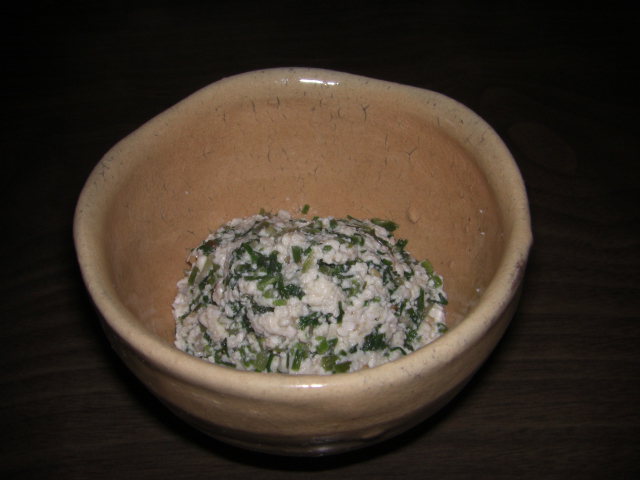
We also eat 芹 as a vegetable. The photo is the dish called 白和え. 白和え is like a salad dressed with tofu, white sesame, and miso.
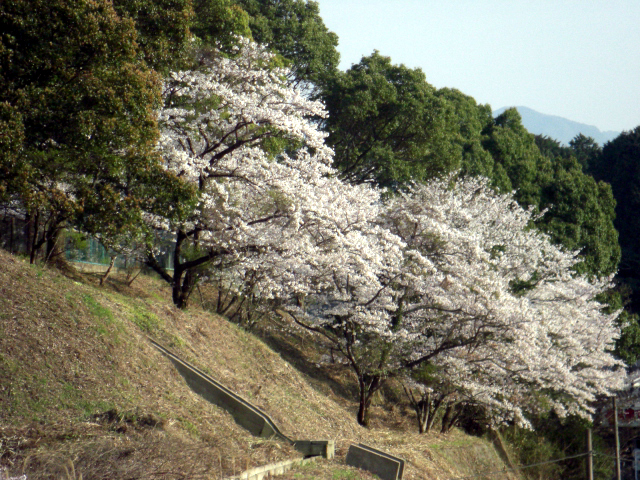
And well-known 桜.
They are my pleasures in spring. But, this spring has brought a trouble to me, too. Allergy symptoms such as a runny nose and sneezing. Sigh.
 |
 |
 |
Hi, guys, I found this article on the Net, which the original author seems to have written in 2004 April. At my reading, I was in stitches. I want to share this experience with you, so translate it (^o^). Can you get what fun this is by my translation? Well, I’ll try it……
Let’s read the translation of “Programming language ‘Japanese'”.
* [1][2] in the following text are added by me.
————————————————————————————————————————————————
|
Programming language
“Japanese”
●
April 2004
Leshade Entis |
||
|---|---|---|
|
■ Introduction |
||
|
Japanese is one of the oldest classes of programming languages in the world, which was invented by the ancient Jomon1 people about 10,000 years ago. (※) ※ If I write just to be sure, this document is an attempt to say a commentary as the programming language “Japanese”, and have fun clarifying the meaning of the words we usually use without considering. |
||
|
■ Disclaimer |
||
|
Please use this software under your responsibility. I have no responsibility for the damage caused by the software. |
||
|
■ Outline of the programming language “Japanese” |
||
|
“Japanese” has the following features. ◆ Powerful macro
A lot of particles and auxiliary verbs characterize some features of Japanese. |
||
|
Original: I feel blue. |
||
|
◆ Flexible syllable structure
Japanese syllables are considerably simplified and their combination has a lot of flexibility, which is one of Japanese features. |
||
|
Example: はにゃ~~~ん |
||
|
This feature is very powerful, so you can consist a statement only using mimetic words combined with macro. (※) |
||
|
Example: ごぉごぉざぁざぁびゅうびゅうの中を、とぼとぼ行ってたら、ふにゅ~~でぬめぇ~~~っとしたのがうじゃうじゃしてたし、さっきはブーブーがダー、バ シャっで、もうびしょびしょでくたくたで、ふえぇ~~~~んって感じ。 |
||
|
※ Heavy use of mimetic words usually gives lower-class impression, but, you’ll find the interesting thing when writing down everyday conversation into sentences. |
||
|
◆ Advanced abstraction and hiding
Japanese can describe the state of one’s mind and delicate things, on the contrary, it can make an abstract description for the subject. |
||
|
■ Main syntax |
||
|
I’ll explain the syntax that is often used in Japanese. ◆ “dōmo (どうも)” There are various usage “dōmo (どうも)”. <dōmo statement>
The statement consists of only “dōmo” is called “dōmo statement” and doesn’t do anything. |
||
|
Example: どうも、どうも。 |
||
|
<dōmo prefix>
By writing “dōmo” to the beginning of the statement, you can run its following statements in a special synchronization state. |
||
|
Example: どうも、すいません。 |
||
|
<Variable or function name>
You can use “dōmo” as a variable or a function name that don’t have a special meaning. <Type about “dōmo”>
“dōmo” does not identify the type. ◆ “yoroshiku (よろしく)” “yoroshiku” is an instruction that tells the act accordingly. |
||
|
どうも、よろしく。 |
||
|
a function and this statement are equivalent. The function automatically selects a procedure set to realize what an object wants. The object is assigned to the “dōmo” pointer and itself knows what it wants. Then, it runs in a state of maintaining synchronization “dōmo synchronization”. ◆ “īimide (良い意味で)”
“īimide” is a kind of pseudo-instruction. |
||
|
Example: 良い意味で競争する。 |
||
|
◆ “osewaninatteorimasu (お世話になっております)”
“osewaninatteorimasu” is a kind of declaration statement, to which a compiler feels obliged. ◆ “shitsureishimasu (失礼します)”
“shitsureishimasu” is a kind of declaration statement, which you should declare in advance when you might be rude. ◆ “otsukaresamadesu (お疲れ様です)”
“otsukaresamadesu” is a kind of declaration statement. ◆ “moshi (もし)”
If you want to write a “moshi” statement, you use this with conditional options in advance. ◆ “kentōshitemimasu (検討してみます)”
“kentōshitemimasu” statement spools the tasks. ◆ “tameshitemimasu (試してみます)”
“tameshitemimasu” is a kind of declaration statement, which you should declare in advance when you code a procedure set which might return a lot of errors. ◆ Final particles, “wa (わ)” “ne (ね)” “aru (アル)” “nyo (にょ)”, etc.
In Japanese, you can describe a final particle at the end of the statement. |
||
|
Examples: |
||
|
■ The helpful knowledge in Japanese programming |
||
|
Last of all, I’ll write some helpful knowledge in Japanese programming. ◆ Describe expressions vaguely
In Japanese programming, to describe an expression exactly is senseless. ◆ Out of sight, out of mind
Generally, you should not write that it is considered “evil”. ◆ Attempt a description by passive form
Modern times, in particular today, the mainstream of Japanese programming is the description by passive form. ◆ Not adding spaces between the words
You never add spaces between the words, with an emphasis on readability. ◆ Syntax error is recommended
If you don’t know how to describe exactly, you try to describe it without thinking. Copyright (C) 2004 Leshade Entis. All rights reserved. |
||
————————————————————————————————————————————————
The original article title is “プログラミング言語「日本語」” by Leshade Entis. He is surely a native Japanese speaker, I think. If you have feelings of curiosity, visit and read it in Japanese!!
I’ve read this and found the new 5.14.4 and 5.16.3 versions include these fixes. So I update to 5.16.3.
Rewrite the first line of printenv.pl.
#!D:/programs/perl/bin/perl.exe —>> #!C:/perl/bin/perl.exe
Copy printenv.pl to your cgi-bin directory and check http://YourDomain.com/cgi-bin/printenv.pl.
If you have the ENV list, your installation is complete.
Delete printenv.pl.
That’s it.
Update information Edit(Aug.3)
At Mar-15 04:08:07UTC, they released PHP5.4.13. So, I downloaded a Thread Safe version php-5.4.13-Win32-VC9-x86.zip for my server.
Acoording to the ChangeLog, it has some bug fixes, also patches for CVE-2013-1635 and CVE-2013-1643 that relate to SOAP.
As php5apache2_4.dll included in the official PHP binary 5.4.10+, I extracted the zip archive and replaced all PHP5.4.12 files with all PHP5.4.13 files except my php.ini. Then, I restarted my Apache. That’s it.
If you need how to configure PHP5.4, please see the post on my Japanese blog. Of course, it is only in Japanese and for a mbstrings user, but I think the information gives some help for you.
Edit(Aug.3):
If you need how to configure PHP5.5, please see “To create a Wamp-like Web Server in Windows7-#2“.
I added three new translations to “The translation of Juuni kokuki newsletter by Shinchōsha“.
According to it, Ono sensei has finished writing one of the two stories and is writing another for the book released on July 1st.
Today was the last day of “KENJI, 80 years after his death (80年後のKENJI)” on air.
The program of the day was based on “Night on the Galactic Railroad (銀河鉄道の夜)”. This is his longest story and one of his unpublished works.
The moment I watched it, I had strange feelings the actors performing Campanella and Giovanni were too older than I thought when I had read the story. In my mind, they are in their early teenage years.
But, it was able to give me its feeling of the story, very beautiful and visional.
As you know, a new collection of 4 short stories by Ono sensei will be released on July 1st. Now, I’m re-translating three short stories, Hisho no Tori, Hyōhaku, and Rakushō no Goku, in preparation for it.
My translation site has few native English speakers. The reason is maybe my translation is terrible. I have my style of writing, when I write in Japanese, but……
Reading some texts, I feel the biggest pain when I read a terrible text in Japanese. So, other people will have the same pain when they read a terrible text in their native language.
My re-translation does not promise to improve, but probably better than nothing. Actually, I myself find the parts I cannot understand in the translation of “Hisho no tori”.
I began to translate it in April 2008. Five years have passed since then, do I have made progress on my English? Anyway, I’ll try to!!
I added some new to “The translation of Juuni kokuki newsletter by Shinchōsha“.
Apache HTTP Server 2.4.4 which is for fixing CVE-2012-3499 and CVE-2012-4558 was released.
I downloaded httpd-2.4.4-win32-VC9.zip (23 Feb) from the ApacheLounge for My WindowsXP server. The httpd.conf has changes in the next two places.
————————————————————————————————————————————————